Deepl Translation:
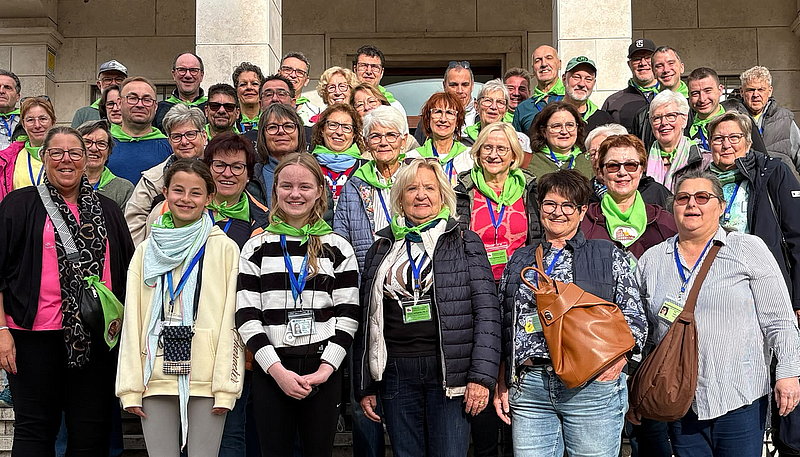
Mechernich-Wachendorf/Rome – For a week, Wachendorf had fewer residents, whilst Rome welcomed 45 more pilgrims: men and women aged between 14 and 80 from the Eifel and Voreifel regions. The pilgrimage was once again organised by the local association ‘Gemeinschaft der Freunde Roms e.V.’ (Friends of Rome), under the leadership of its chairman, Hans-Diethard Eichinger-Heß.
He knows where to find Rome’s major sights as well as its quieter spiritual havens: As early as 1975, when he was just 15 years old, Eichinger-Heß attended his first papal audience; since then, he has organised and accompanied dozens of pilgrimage and study trips to the Eternal City, most recently during the Holy Year 2025 for the St Barbara Mechernich Pastoral Area and the Ordo Communionis in Christo; in April 2027, he will once again lead a group from Mechernich to Rome.
No sooner had they landed in Rome than the coach – which was available for the duration of their stay – took the pilgrims up to the Gianicolo, from where the city spreads out like a vast history book. From there, they walked to Trastevere for lunch in one of the metropolis’s most ‘Roman’ neighbourhoods.
At San Paolo fuori le Mura, St Paul’s Outside the Walls, the pilgrims stood at the tomb of Paul, the Apostle to the Gentiles. It was not only the immense size of the papal basilica that made an impression, but also the famous row of papal medallions from Peter to Leo XIV.
The group was accommodated at Villa Monte Mario, above the Vatican. There, a ritual quickly developed which Eichinger-Heß considers at least as important as the sightseeing: eating together – and then sitting together on the garden terrace with wine, water and nibbles.
Seeing and exploring
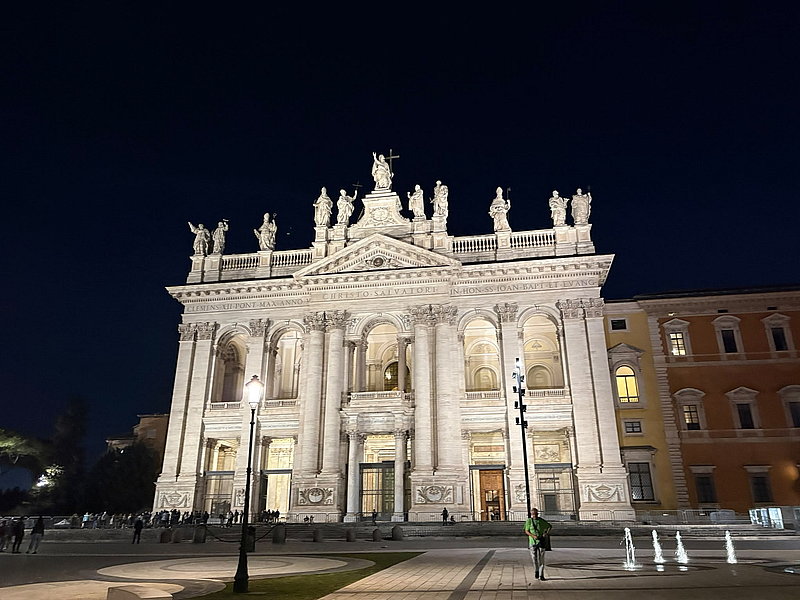
The trip was expressly not a ‘rush’ to visit every available sight. Morning prayers, communal Masses, visits to the tombs of the Apostles and the great churches of the Eternal City were just as much a part of the programme as the Colosseum, the Roman Forum, the Capitoline Hill, the Spanish Steps and the Trevi Fountain. San Giovanni in Laterano, the cathedral of the Bishop of Rome and ‘mother and head of all the churches of the city and the world’, was of course also visited as part of the pilgrimage.
The Vatican Gardens and Museums were on the itinerary the following day. The guided tours lasted three hours, before the group set off in the afternoon along the Via Appia to the Basilica of San Sebastiano fuori le Mura and the Catacombs of St Sebastian. There, the group attended a pilgrims’ Mass with Father Christian Böck, the director of the German-speaking Pilgrimage Centre in Rome.
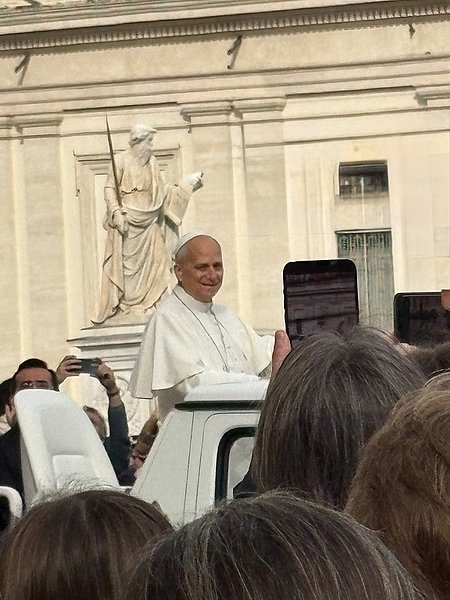
In St Peter’s Square, the 45 pilgrims attended the general audience with Pope Leo XIV. On 28 October, the Holy Father spoke about the relationship between faith and culture in the Pastoral Constitution ‘Gaudium et spes’ of the Second Vatican Council. According to Pope Leo XIV, faith must not isolate itself from the world and its culture, but must permeate people’s thoughts, feelings and lives and enter into dialogue with them.
After the audience, Father Böck celebrated Holy Mass with the Eifel pilgrims at Santa Maria della Pietà on the Campo Santo Teutonico. As a token of thanks, the Rome chaplain received Bad Münstereifel ‘Printen’ and a candle bearing the emblem of the ‘Friends of Rome’.
And because Rhineland pilgrims can bring a touch of carnival with them even to Rome, there was another first: Michael Bier, President of the ‘Große Karnevals-Gesellschaft Greesberger Köln von 1852’, awarded Father Böck the society’s carnival medal. The Greesberger society will celebrate its 175th anniversary in 2027. Bier has been at its helm since 2025, whilst Eichinger-Heß serves on the executive committee as an assessor.
A day trip took the group to Pompeii. The travellers reported afterwards that the day had been exhausting – but also ‘incredibly eventful’. Friday finally took them to the place where pilgrims to Rome have been heading for centuries: the tomb of the Apostle Peter beneath St Peter’s Basilica. In the evening, Rome showed the visitors from the Voreifel and the Eifel yet another side: after dining together, the group returned to the city centre and marvelled at the Spanish Steps and the Trevi Fountain bathed in the glow of the night-time lights.
On Reformation Day, they visited Castel Sant’Angelo and walked through the Passetto di Borgo, the fortified passageway through which popes could reach safety between the Vatican and Castel Sant’Angelo in times of danger. Via Sant’Ignazio, the Pantheon and Piazza Navona, the pilgrims finally reached Santa Maria dell’Anima, the church of the German-speaking Catholic community, for the vigil Mass on All Saints’ Eve.
In the footsteps of Philip Neri
On the return journey on Sunday, the group also visited Santa Croce in Gerusalemme, with its venerated relics of the Cross – which, according to tradition, date back to Saint Helena – as well as San Lorenzo fuori le Mura. The group had thus visited all seven of Rome’s traditional pilgrimage churches.
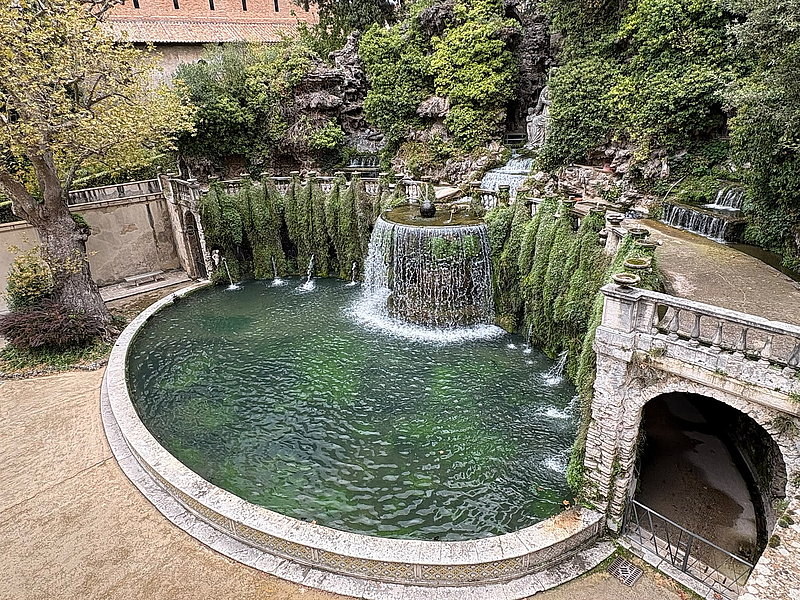
These are St Peter’s Basilica, St Paul Outside the Walls, San Giovanni in Laterano, Santa Maria Maggiore, Santa Croce in Gerusalemme, San Lorenzo fuori le Mura and San Sebastiano. The circuit of these seven churches is a centuries-old Roman pilgrimage tradition, particularly associated with St Philip Neri and the 16th century. A detour to Tivoli to visit the Villa d’Este provided the cultural finale before heading to the airport.
For Diethard Eichinger-Heß, what remained could not simply be ticked off a list of churches and monuments visited. What mattered most, he said, were the morning prayer and the Eucharist, the Apostles’ tombs and the prayer at St Peter’s tomb, the meeting with the Pope – but also the meals, the conversations and the mutual care shown to one another.
The organisers were particularly pleased that this approach had worked for people aged 14 as well as 80. A message received after his return summed up the true meaning of the journey for Eichinger-Heß: Rome had been wonderful – and his own faith had been strengthened by the pilgrimage.
Mechernich to follow in April
For pilgrims from Mechernich and the surrounding area, this account serves as a foretaste. From 20 to 27 April 2027, the St Barbara Mechernich Pastoral Area and the Ordo Communionis in Christo will once again embark on a joint pilgrimage to Rome. This trip is also being organised by the Community of Friends of Rome led by Hans-Diethard Eichinger-Heß. A group of 40 people from Mechernich had already visited Rome with Eichinger-Heß and Father Patrick Mwanguhya during the Holy Year of 2025.
In 2027, the group is set to stay at Villa Monte Mario once again. Plans include a papal audience, a visit to St Peter’s Basilica and the Apostles’ Tombs, Masses at Santa Maria dell’Anima, the Campo Santo Teutonico and Santa Cecilia in Trastevere, as well as the Vatican Museums, ancient Rome and excursions to Pompeii and Tivoli. The published price so far is 1,590 euros, including flights, transfers, accommodation with half-board and the shared main programme. The first information meeting will take place on Monday, 9 November, at 6.30 pm at the Johanneshaus in Mechernich. You are warmly invited by pilgrimage leader Diethard Eichinger-Hess and the spiritual guide, Deacon Manfred Lang.
pp/ProfiPress Agency